Italian Table Talks: olive trees, olive oil and dried black olives


Italian Table Talks: olive trees, olive oil and dried black olives


Extra virgin olive oil, or just olive oil. Hard to say what it is for me, what it means for our gastronomic tradition without falling into an elegy or writing a mini encyclopedia, with cross-references and footnotes. Perhaps, more simply, I would say that olive oil is for me daily life. It is the bottle that has earned the right to a place of honor in the cupboard. The bread and the olive oil when you feel rather peckish and want to end the meal with something comforting. It is a good drizzle of olive oil over a steaming hot vegetable soup or our pappa al pomodoro. I use it generously during my cooking classes, because the secret is all there. To paraphrase Julia Child, we could say that the olive oil makes everything better (of course the butter has its merits as well!).
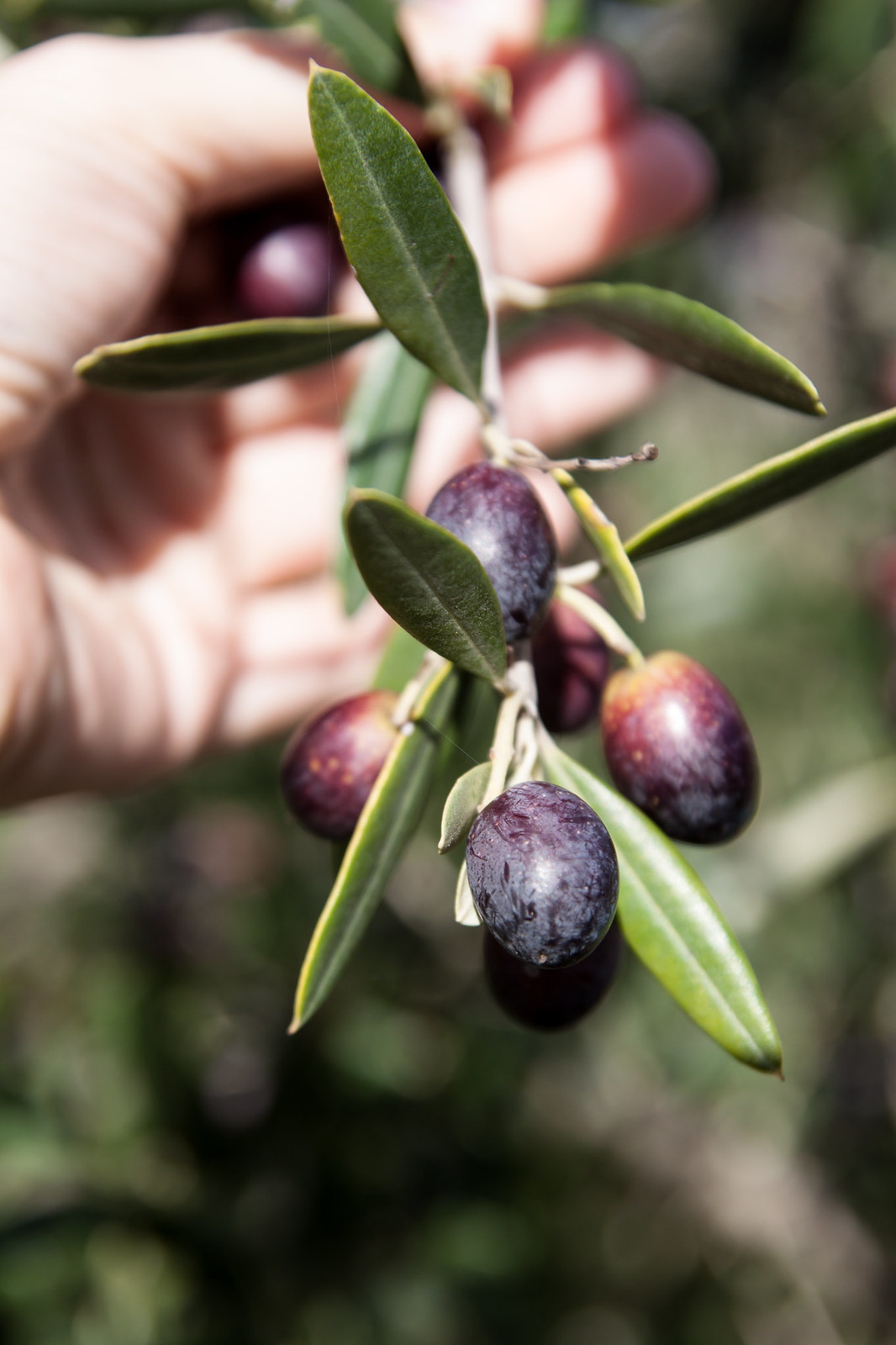
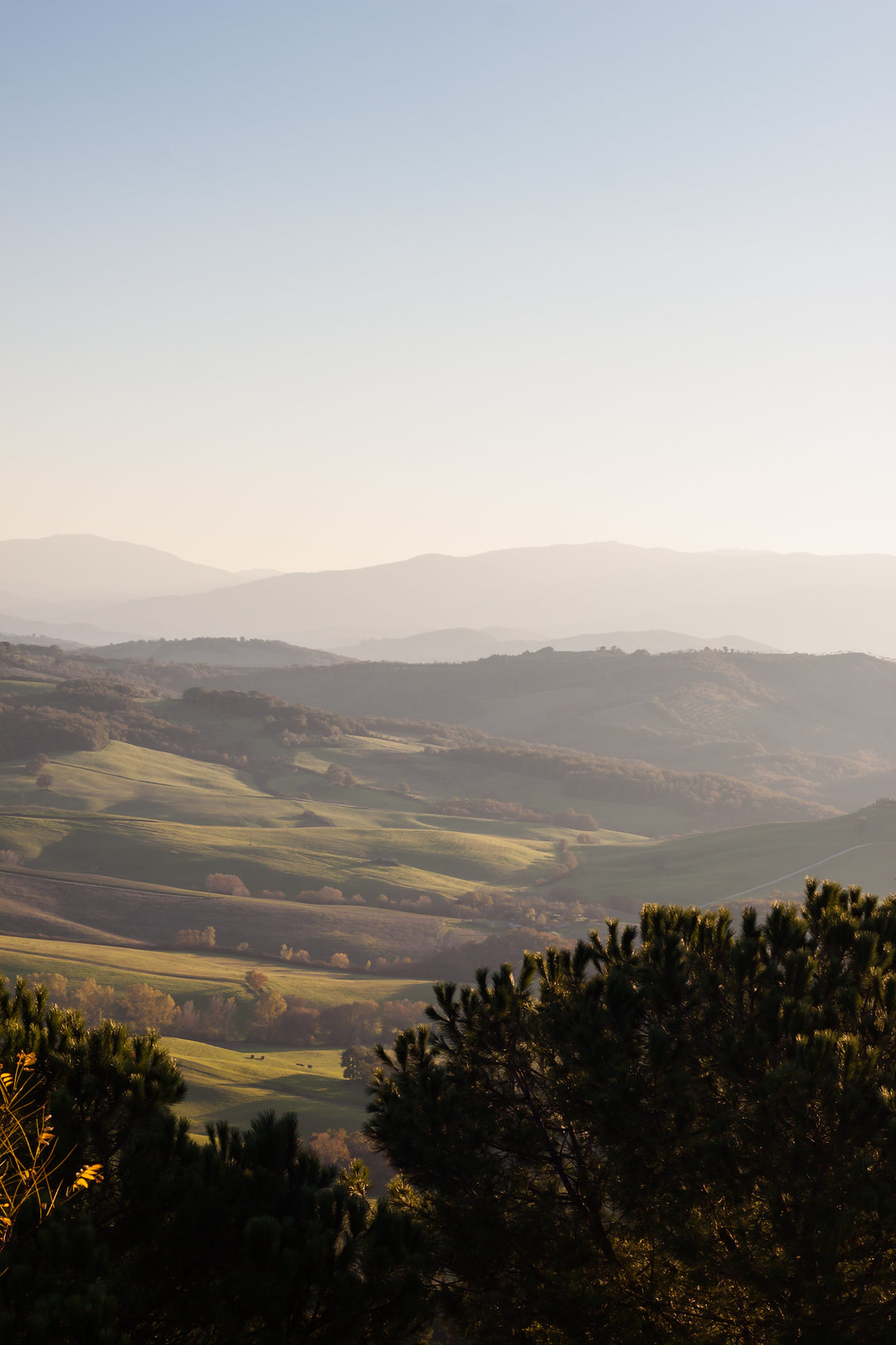
Besides the olive oil, the olive trees. These are trees that may seem stern, though they generously make unique our Tuscan hills – and the Italian and the Mediterranean ones – creating a landscape that you immediately recognize as home. Gnarled yet elegant with their silver and bitter leaves, they are often ancient trees that have lived the history of our country, they embody symbols, traditions, legends, religious and pagan beliefs. The olive trees represent for us a symbol of peace, but they are also the tangible sign of the culture of the peasant labour, the patient work on a loved and  beautiful landscape.
So we tried. We love olive oil and we chose it as theme of our Italian Table Talk for this month along with olives and olive trees, since November is traditionally the month of the olive harvest and new leafy green olive oil. Undeniably a difficult task, but perhaps we can give you a little account of what olive oil means for us and the importance it has in our every day lives, not just in the kitchen.
Emiko then offers us a tasty Tuscan dish, coniglio con le olive, you would want to lick the plate clean. Valeria makes a sauce from Piedmont, a comforting dream in the cold months, bagnet verd. Jasmine is instead offering us a sweet end to our virtual lunch, a Jewish crostata made with olive oil. As for me, I’ll tell you what my great grandparents used to make with a few black olives saved from the olive milling.
– This year it yields of the fourteen.
– Really? It yields of the eleven to me, just eleven…
– I heard Giovanni’s olives yield of the eighteen!
These are the speeches that you can hear at the olive oil mill, and they are always made in a low voice of course. But before you can get to the mill the road is long.
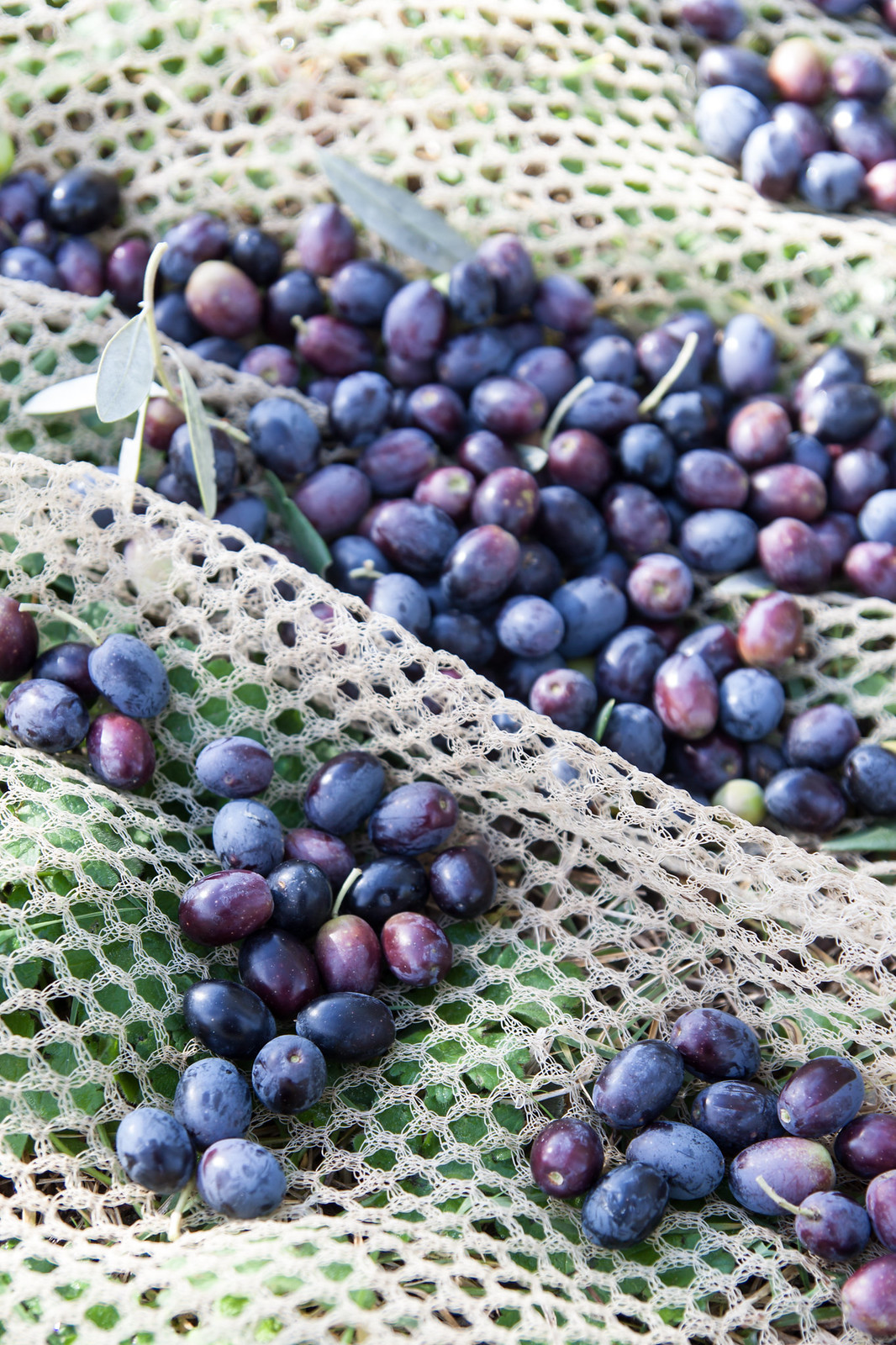
The olives are harvested by hand, at most with the help of a plastic rake with which you comb the olive tree branches so that the ripe olives fall to the ground on a net spread all around the trees. The olive harvest is less joyous and festive of the grape harvest, since outside the temperatures are already more rigid and often the wind makes you wish to be in a completely different place, not on a ladder with your head completely stuck inside the olive tree.
Yet it has its own charm, its fascinating tradition. I must admit I would rather spend the morning in the kitchen making bread soup and roast meat for the workers than balanced on a ladder, but from what my grandmother told me there were no discounts, when it was time to pick olives everyone was summoned, every day without rain was a good day if you wanted to finish before Christmas.
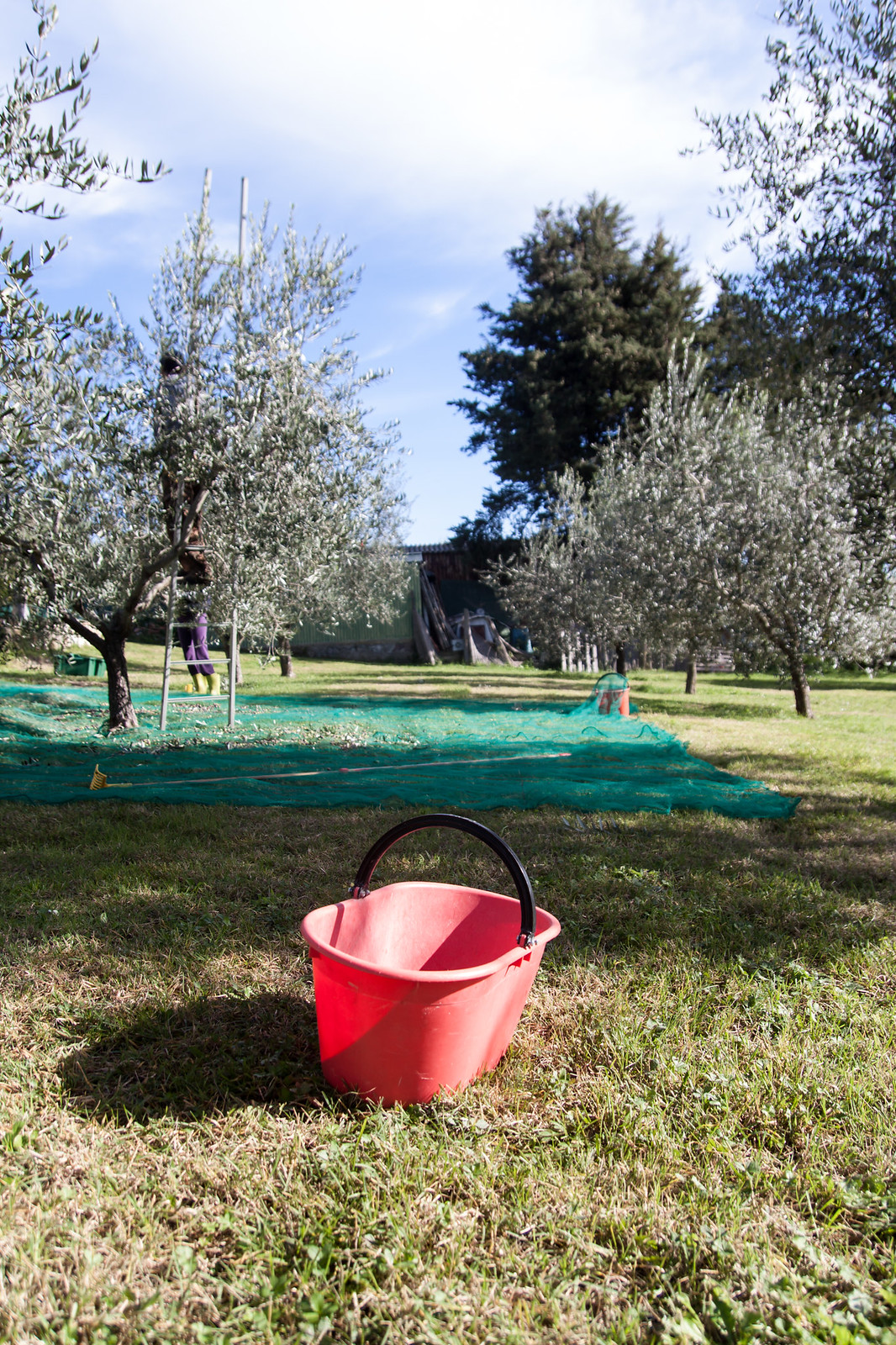
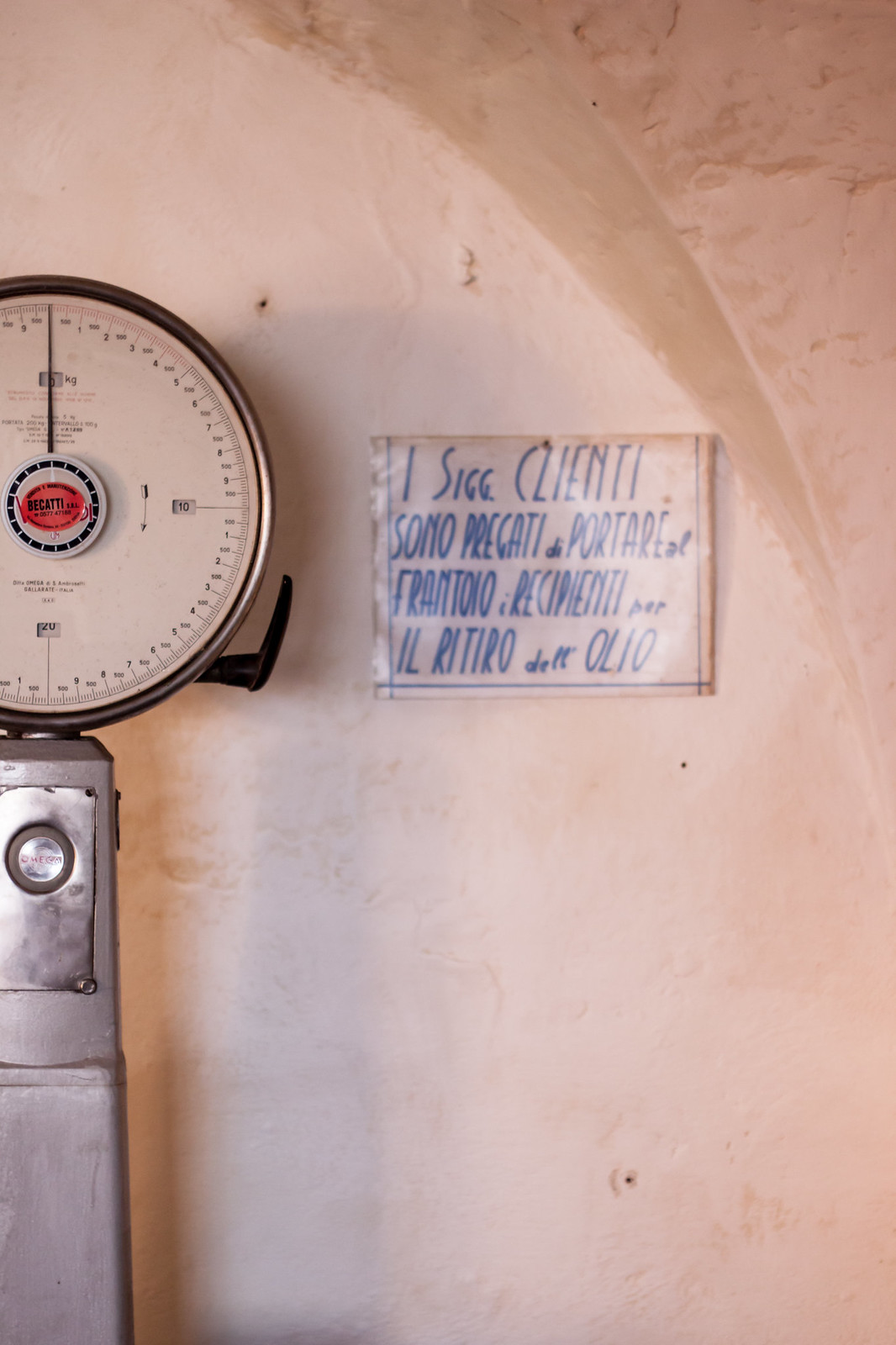
My great-grandfather Piero used to bring the olives to the mill of Casole with a cart and a horse and he would spend the whole day there, coming back really late in the night, to make sure everything was done properly. This year with dad and Claudia we went back to the same olive mill, a frantoio, filling up the trunk of our two cars. Modern times.
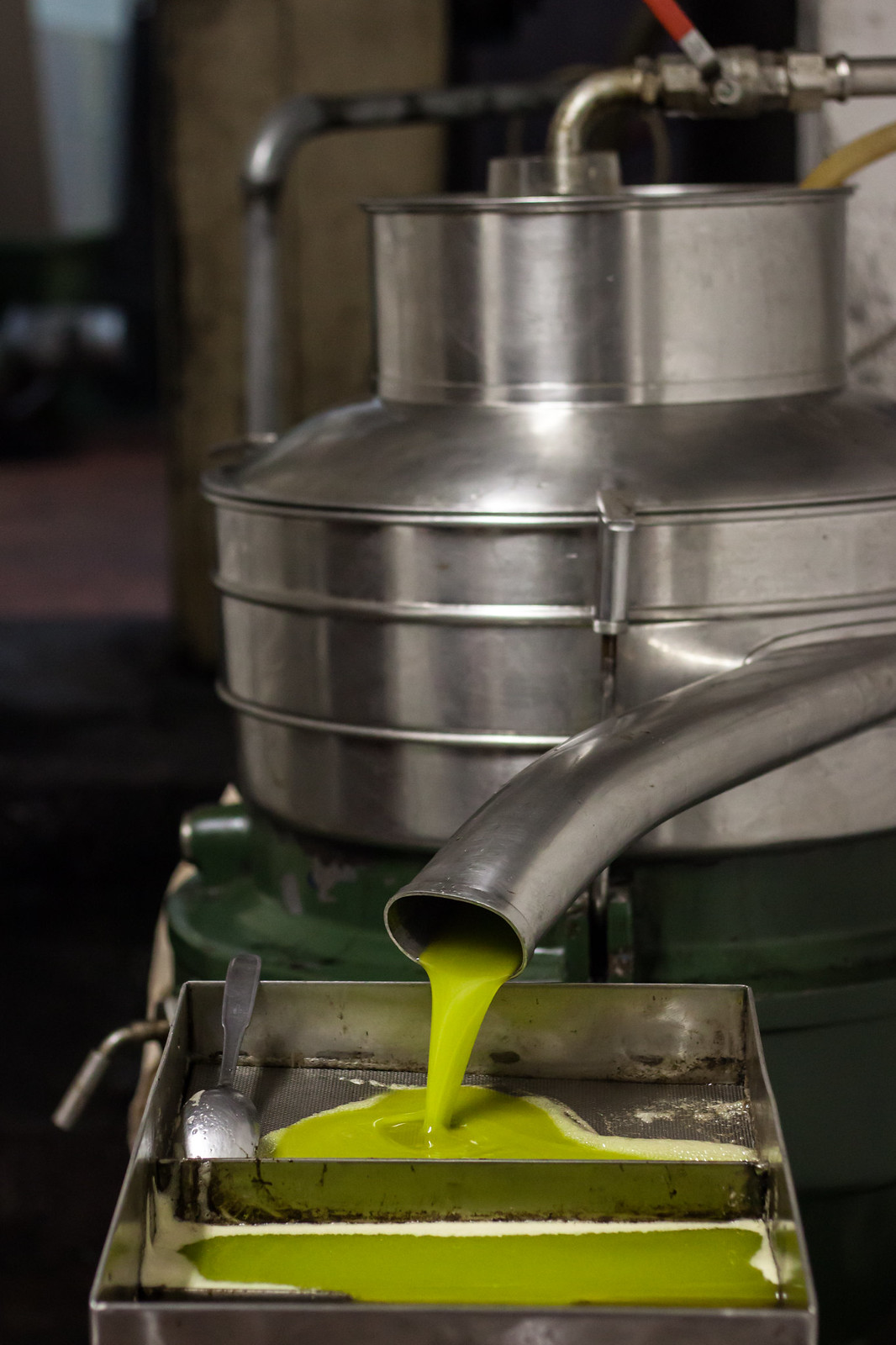
Although times have changed, my dad spent the whole afternoon there, checking our olives, talking with the other people there, making the line waiting for our turn and enjoying a bruschetta at the end of the day. The olives are cleaned by removing the leaves, crushed and then milled, pressed to remove the water, and at the end of the process, after forty minutes, here you have your olive oil, green, dense, fragrant and unfiltered.
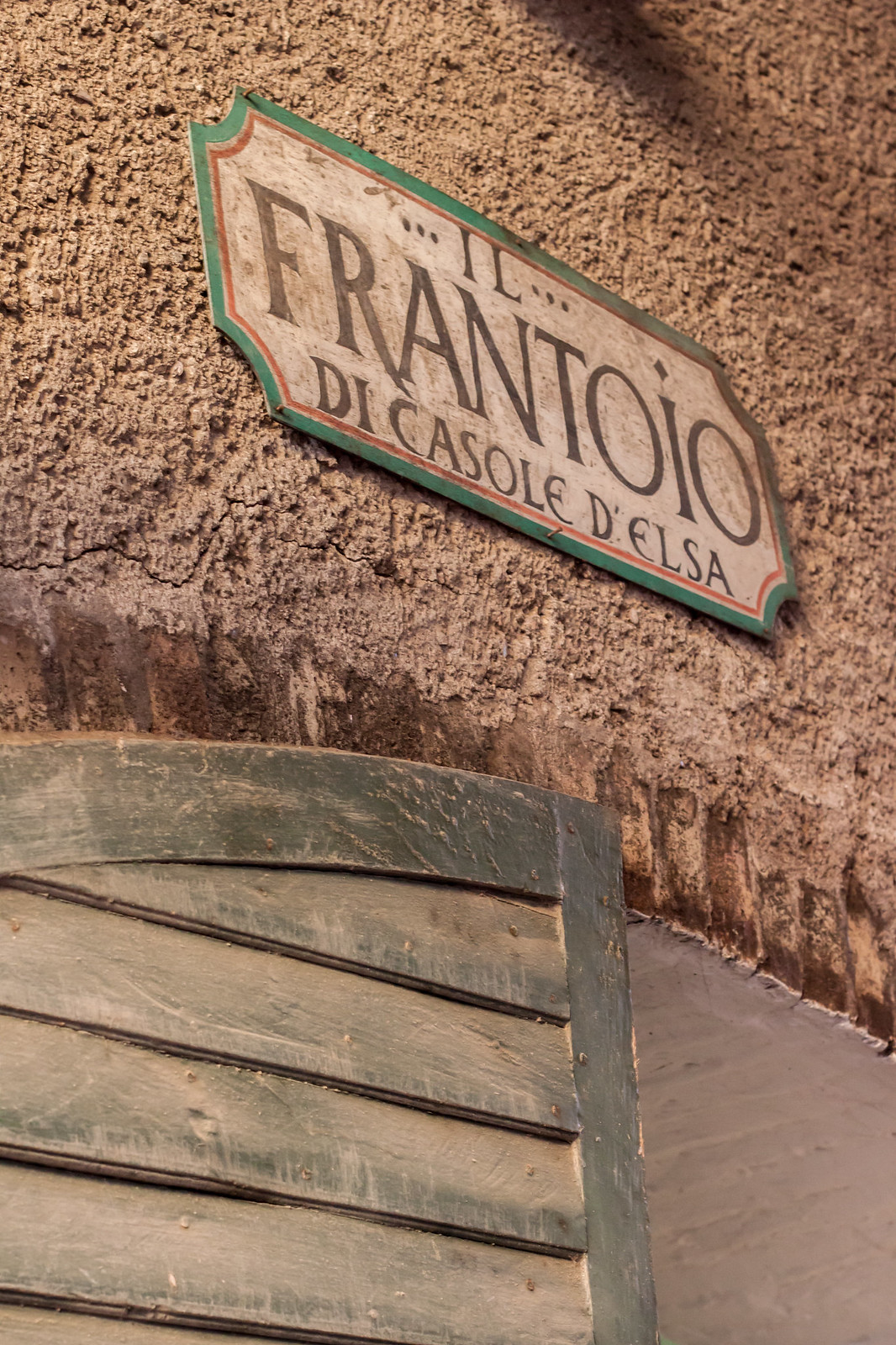
      
The first thing you think of is bruschetta, then immediately you take your olive oil and weigh it, to understand how much it yielded this year. This is where the strange and grammatically incorrect sentence comes into the scene, a most incomprehensible dialect expression. Quest’anno ha reso delle quattordici e quattro. This year it yields of the fourteen and four, that is we had 14.4 kg of olive oil every ton of olives. I know, it is not correct, though if you don’t want to sound like a newcomer you have to use it, too.
We brought home the olive oil, with no other definition or labels. It is the same that was happening with wine until about thirty years ago: it was wine, it was the peasants’ wine, red or white. Now everyone is talking about grape varieties, terroir, food matching… we should do the same with olive oil, we should be able to recognize the differences, to combine the olive oil just with the right dish, so that it does not cover the flavour of your dish with its spicy or bitter aftertaste, but uplifts it to another level of perfection.
There are DOPs*, cultivars, different olive oils that have distinctly different aromas, colours and flavours. Just imagine, if you are well trained you can recognize and taste bitter almond, tomato leaves, freshly cut grass, artichoke… it’s a whole range of flavours that tickle your palate and enhance the food. To quickly understand the differences, it would be enough to start buying a few bottles of good olive oil from different Italian regions, and see how it changes even the experience of a simple salad.
I’ll say it once, and then I won’t say it again: my favourite olive oil is the Sicilian one, I have a soft spot for Nocellara del Belice … but try a also a Tuscan olive oil (you owe me), an Umbrian or an olive oil from Brisighella, the Apulian olive oil made from coratina (oh how I love it drizzled over burrata), a light Ligurian or another light olive oil from Lake of Garda … I stop here, but just name an olive grove region and you will have a great olive oil that is worth trying.
But I had promised black olives…
* Denominazione d’Origine Protetta – is the Italian certification of authenticity of origin, valid for olive oil and many other products, such as cheese, salami… It is like the wine DOC.
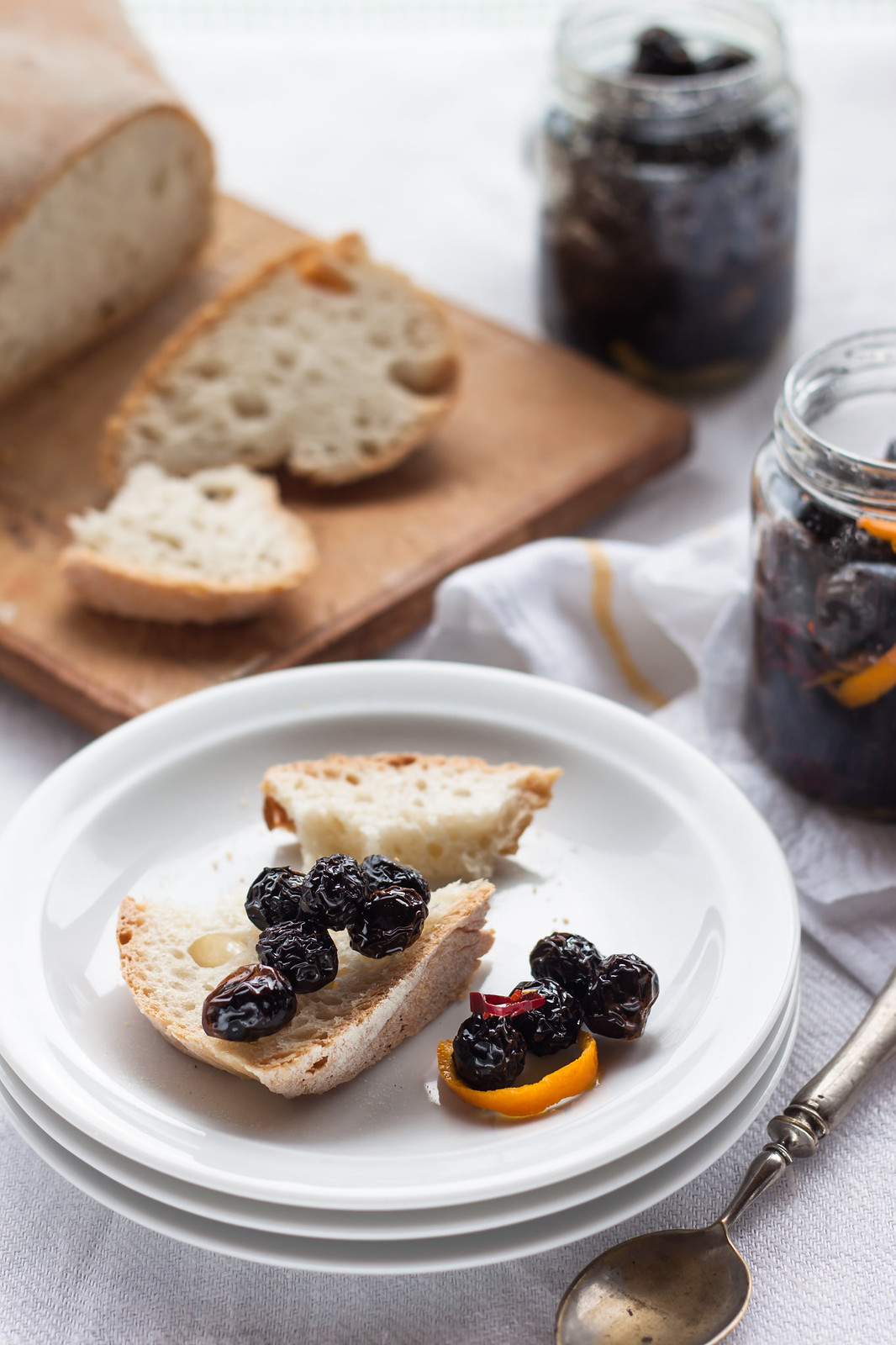
My great-grandmother would pick the best black olives during the olive harvest, then she would dry them in the wood stove oven and keep them in a paper bag. They used to eat the dried olives plain with a slice of crusty bread, it was a lunch that wouldn’t take away much time and that would give them enough calories to deal with the rest of the daily tasks.
A neighbour suggested to my grandmother yet another method to preserve the olives: they not only were dried, but they were also kept in a jar with olive oil, which softens them a little bit, garlic, chilli and orange peel. It is apparently a Southern recipe, and you can actually recognize the warmth and flavours of the Mediterranean area.
Keep some jars of dried black olives in the pantry and serve them as unusual appetizer along with a cheese board or use them to enrich a pasta dish, a farro salad in summer or a winter stew.
5.0 from 4 reviews
Dried black olives
Author: 
Recipe type: Preserve
Cuisine: Italian
You'll need
  • Black olives
  • Salt
  • Extra virgin olive oil
  • Chili peppers
  • Garlic
  • Orange peel
How to make it
  1. Choose sound black olives, rinse under running water and put in a large bowl.
  2. Bring to the boil a large pot of salted water, then pour it over the olives and let soak for ten minutes, then rinse and drain.
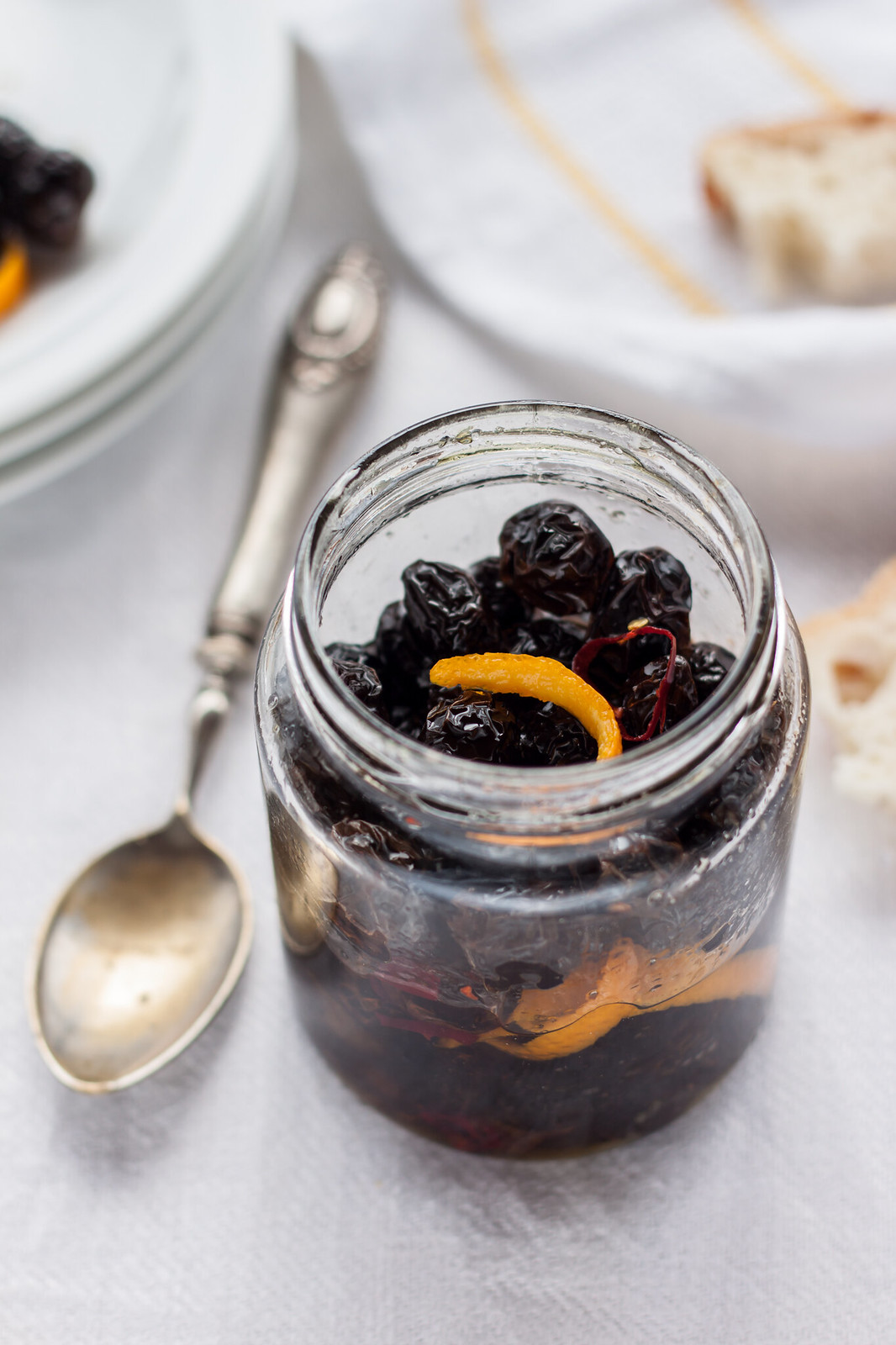
  3. Arrange the olives on a baking sheet in a single layer and dry completely. You can place the tray next to the fireplace for a few days until the olives are completely wrinkled and dried or you can use the residual heat of the oven, after you baked a pizza, a roast or a cake for example. Alternatively, you can also turn on the oven and heat it to 100°C, then leave the olive inside until they are dry, as in the picture.
  4. When, after a few days, the olives are ready put them in a glass jar with a pinch of salt, thinly sliced chilli pepper, a clove of garlic and a few tablespoons of extra virgin olive oil. Close the jar and shake to evenly distribute the seasonings.
  5. Let it rest for a few weeks before eating, shaking often the jar. It can be stored for several months in the pantry.
Link love
Not to lose a single post by the Italian Table talk girls, these are our Social Accounts:
The hashtag to follow the conversation on Italian Table talk on Twitter is #ITabletalk (easy, isn’t it?). We are curious to hear your voices, to find out what olive oil is for you, if you have recipes to share or if you just love olive oil like we do!
Sharing is caring:

Tajine de prepelita cu condimente

Tajine de prepelita cu condimente


Un preparat deosebit de aromat si de fin. Tajine (se pronunta “tajin”) este numele marocan al unui vas tuguiat din teracota, dar si al tocanelor care se pregatesc cu si in el. Este o mancare traditionala din Maroc, mancare facuta in casa din vremuri vechi, gustoasa si inconfundabila. Haideti s-o pregatim impreuna!
Timp de preparare: 2 ore, 4 portii, dificultate medie
Ingrediente:
  • 2 prepelite (sau, dupa preferinte, 2 porumbei)
  • condimente: anason, ienibahar, ghimbir, cucuma, nocsoara, usturoi, hell (cardamon), boabe de coriandru, sofran, dafin, patrunjel
  • ceapa, radacina de telina, morcovi, fenel
  • sos de oase de prepelita
  • suc de lime
Mod de preparare:
Un preparat deosebit de aromat si de fin. Tajine (se pronunta “tajin”) este numele marocan al unui vas tuguiat din teracota, dar si al tocanelor care se pregatesc cu si in el. Eu o sa-l folosesc doar la prezentare si o sa gatesc intr-o oala obisnuita, fiindca pregatesc mancare pentru mai multe persoane. Dar se poate gati si direct in vasul tajine – mancarea se face intr-o ora si jumatate, la 170 de grade Celsius.
Se taie ceapa julien si se caleste. Se pune o steluta de anason, ghimbir, ienibahar (10 boabe), coriandru, un varf de hell, 4 catei de usturoi, sofran, 2 foi de dafin si se amesteca totul, apoi se adauga suc de lime.
Se taie in jumatate prepelitele deja curatate si cosmetizate (fara extremitati) si se pun intr-o oala cu unt, sare si piper negru zdrobit pana capata o culoare galbena. Se adauga morcovii, bucati mari de telina, fenel, patrunjel si se inteteste focul. Se adauga sosul de oase (care se face din oase de prepelita sau de porumbel, paste de rosii, vin rosu, ceapa, morcov, foi de dafin). Se lasa la fiert cam o ora si jumatate – apoi se pune staniol peste oala si se lasa la foc mic.
Mod de prezentare:
Se monteaza in tajine. Se asaza prepelitele cu sosul, fenelul si telina, se decoreaza cu ramurele de cimbru si foi de dafin.
Ce aroma!

*reteta a fost pregatita pentru revista Mega Image, prietenii mei de nadejde
- See more at: http://chefjosephhadad.ro/recipes/tajine-de-prepelita-cu-condimente/#sthash.5tVJLMBy.dpuf

How To Make Baklava


How To Make Baklava


Baklava is one of those desserts that has a reputation for difficulty, but is actually surprisingly easy to make. I suspect this is because working with phyllo dough always seems tricky, but if you follow a few very simple tips, it's really not — and the results are irresistible. Read on for how to make a pan of sticky, sweet, buttery, flaky, nutty baklava!
Baklava is a dessert of the Middle East and Mediterranean, and it has numerous variations depending on the country of origin. Turkey, Syria, Lebanon, Greece, Jordan, Israel, Afghanistan, Georgia, Iran, Armenia, and many other countries and regions all have a variation of this pastry, which is made with buttered layers of phyllo dough and ground nuts (usually pistachio, walnuts, or almonds, or a combination) and covered in a sweet, often honeyed, syrup. Other flavorings include cinnamon, cloves, rose water, cardamon, clove, and orange rind.
For this recipe, I used a mixture of walnuts and pistachios. I like this flavor combination and the pretty green color that the pistachios bring. For this same reason, I garnish my baklava with chopped pistachios, but you can use walnuts as well.
The thing that most often scares people away from making baklava is handling the tissue paper-like sheets of phyllo. It really isn't that difficult, if you remember a few simple tips.

Tips for Working with Phyllo

  • Defrost your phyllo dough in the refrigerator. The night before you are going to make your baklava, put the package of phyllo dough in the refrigerator to defrost. Do not try to use frozen phyllo — it will crack.
  • Unwrap it carefully. The phyllo usually comes rolled up in plastic and should unwrap easily. Leave the larger plastic sheet beneath it and try to unroll it in the place where you will be using it so you won't have to move it once it's laid out.
  • Cover with a dampened tea towel. Dampen a cotton or linen tea towel and place it over the unrolled sheets. Important: Be sure the towel is wrung out very well. If the towel is too damp, it will gum up the sheets.
  • Keep it covered. Always replace the tea towel after you have removed a sheet of phyllo from the stack.
  • Handle gently. Be gentle with the sheets of phyllo. Keep the stack near your baking dish so you don't have to transport it very far once you lift a sheet off of the stack.
  • Rips and tears are OK. Phyllo dough rips easily, but that's OK. You are building up several layers of dough, so a rip or ragged edge here and there will be fine, and likely hidden within the baklava. Even if your last piece tears a little, it will only contribute to the rustic, many-layered look of the dish.
  • Trimming the phyllo. Phyllo comes in many sizes and a single sheet might not fit into your baking pan. One option is to trim the phyllo to fit: Simply measure the inside of your pan and, using a scissors, cut the whole stack to fit. I find that scissors are easier than a knife, which can pull and drag on the layers.
  • Trimming isn't always necessary. Even if your sheets aren't a perfect fit to your pan, you can still use them without trimming. Just fold them over to fit, being sure that you stagger the folds so you aren't creating extra layers in one place. 
  • Don't use a ton of butter. You don't have to coat each layer completely with butter. Just gently brush the butter on here and there without covering every inch of the surface. Don't press really hard or you'll drag or tear the phyllo sheet.
You may notice that the measurements for the nuts in the recipe below are given in weight, not volume. This is because the size of the nuts can vary wildly and therefore can really screw up a volume measurement. For example, a cup of whole walnuts will weigh less than a cup of walnut pieces simply because you can fit more pieces in a cup.
The other important thing is to be sure that you have a very sharp knife. The baklava should be cut before you bake it and recut again after baking to be sure all the pieces are separated. A sharp knife is crucial. Many recipes call for as much as one pound of butter to make baklava. I find that somewhat shocking, as I've never needed more that half that amount (two sticks) to make my baklava, and it it always comes out flaky and buttery. It's not necessary to drench each layer of phyllo in butter. Drizzling and dotting the butter will distribute it enough.
Rose water is a traditional flavoring for baklava. I did not include it in the recipe below, but it's easy enough to add if you enjoy its sweet, floral perfume. Alton Brown has a nice trick where you put 1 teaspoon of rose water and 1/4 cup of water in a spritz bottle and then use it to mist the nut layers before starting with the next phyllo layers.
Finally, baklava is best after it sits for a while, so it's perfectly fine to make it a day before you plan to serve it. The recipe below makes about 28 squares, but you can get even more out of it if you cut the squares even smaller. Remember, baklava is a rich pastry and most people only need a bite or two (although it is irresistible!).
I was very grateful that my neighbors were in the middle of a renovation project so I could give away most of the pan of baklava I made for this post to their construction workers. If I hadn't, there's no doubt that I would have eaten the entire pan, given a day or two. It's that good.


I MADE THIS

How To Make Baklava

Makes approximately 28 pieces

What You Need

Ingredients
8 ounces walnuts
8 ounces plus 1/4 cup shelled pistachios
1/4 cup sugar
1 teaspoon cinnamon
2 sticks unsalted butter
1 package frozen phyllo sheets, thawed
For the syrup:
3/4 cup sugar
3/4 cup water
3/4 cup honey
Equipment
Kitchen scale
Food processor
Measuring cups and spoons
Medium-sized bowl
Clean tea towel
Sharp knife or kitchen scissors
9x12x2-inch baking pan
Pastry brush
2-quart saucepan

Instructions

  1. Prep the filling. Preheat the oven to 350°F. Measure out 8 ounces of walnuts and 8 ounces of pistachios using a kitchen scale and place in the bowl of a food processor (reserve the additional 1/4 cup of pistachios for garnish). Add the sugar and cinnamon. Pulse a few times to break up the nuts, but do not chop them too fine or into a powder. Transfer to a bowl.
  2. Melt the butter. Place the two sticks of butter into the saucepan and melt under low heat. Keep an eye on things and turn off the burner when the sticks are nearly melted. The rest will melt from the residual heat of the pan.
  3. Set up your assembly area. Clear off a large surface, such as your kitchen table or counter. Place the bowl of nut filling, the baking pan, the melted butter, and the pastry brush on the surface, reserving a spot for the phyllo.
  4. Set up the phyllo. Unwrap the phyllo sheets and carefully unroll onto the assembly surface, keeping the large sheet of plastic used to roll the sheets underneath. Dampen the tea towel (not too wet!) and lay it over the phyllo. 
  5. Trim the phyllo (optional). If the phyllo dough is too big for your baking pan, trim the phyllo sheets to match the dimensions of your pan. A pair of scissors is the easiest way to do this.
  6. Lay the bottom layer. Using the pastry brush, brush on a thin layer of butter all over the bottom of the baking pan. Fold back the tea towel, carefully remove one sheet of phyllo dough, and place it on the bottom of the pan. Butter the top of the phyllo lightly, making sure you are going out all the way to the edges. Repeat with layering 6 more sheets to total 7 sheets of phyllo, buttering the top of each sheet of phyllo before placing the next. Be sure to re-cover the remaining phyllo with the tea towel each time you remove a sheet.
  7. Add the first layer of nuts. Sprinkle half the nuts over the phyllo and spread them gently with your hand so that you have a fairly even layer. Be sure to spread them all the way to the edges.
  8. Create another phyllo layer. Place a sheet of phyllo on top of the nuts and carefully brush with melted butter. Repeat, layering 4 more sheets in all, with butter between each layer.
  9. Add the second layer of nuts. Sprinkle the remaining layer of nuts over the phyllo. Again, spread them into an even layer and push them all the way to the edges.
  10. Lay the top layer. Place a phyllo sheet on top of the nuts and brush lightly with butter. Repeat, layering 6 more sheets of phyllo, with butter between each layer, to total 7 sheets.
  11. Cut the baklava. Using a very sharp knife, cut the baklava on the diagonal into approximately 28 pieces (can be more if you make smaller pieces).
  12. Bake. Place the pan of baklava in the oven and bake for about 45 minutes. Check half way through and rotate the pan for even browning. 
  13. Chop the pistachios. While the baklava is baking, finely chop the remaining 1/4 cup of pistachios and set aside.
  14. Remove the baklava from the oven and cool. When the phyllo is evenly golden-brown all over, remove the pan from the oven and set on a rack to cool.
  15. Make the syrup. While the baklava is cooling, make the syrup. Combine the sugar, water, and honey in a saucepan and bring to a boil. Boil for 10 minutes.
  16. Re-cut the baklava. While the syrup is cooking, run your knife through the baklava to be sure the pieces are cut all the way through.
  17. Pour on the syrup. When the syrup has boiled for 10 minutes, remove from the stove and carefully pour over the baklava, being sure to coat each piece.
  18. Garnish and serve! Sprinkle some of the chopped pistachios on each of the baklava squares. Cover the baklava and let sit for several hours or overnight before serving. Will keep for up to 5 days, covered.